
BODY SWAY IN BALLROOM DANCE

thX1K70D7W

Body Sway… prompted by a lesson with one of my juvenile dancers Jack last night…..

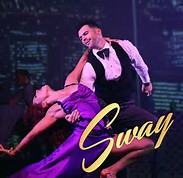
Sway is a natural inclination of the body away from the direction you are moving in. It enables you to  slow down, gain control and kill momentum.

Swaying in ballroom dance can improve the overall aesthetic look.  In order to sway, one side of the rib cage should be stretched more taking care not to compress or collapse the opposite side. Caution must be taken not to break the body line awkwardly at the waist line.


Beginners in dance should not attempt to sway until they have mastered the basic technique. Sway can be misunderstood and incorrect usage will distort your look or appearance and create  other problems such as balance etc.

You do not move your arms up and down to create sway!!!

TRUST ME…. THIS IS NOT WHAT ADJUDICATORS WANT TO SEE!!!

 What was that


A. Technical Sway

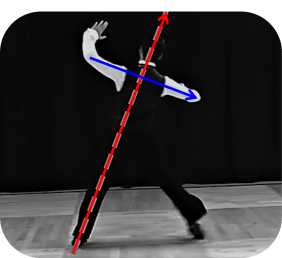
Technical sway is used on all swing figures and comes naturally from correct technique and is proportionally a result of your Swing.

Note the straight line from the left foot up through the body to the top of the head  whilst not collapsing the sides. Also note the straight line of the arms. (Step 2 of a Natural Turn).
Sway

B. Cosmetic Sway

This can be added on top of technical sway to create a more beautiful shape (manufactured movement). It is the increased use of head weight and stretch for example at the end of step 3 in a Natural Turn. Note it should not be done with out Technical Sway but only in addition. 


C. Broken Sway

This sway should not be used in moving figures but only in line figures where the feet are stationary, it is generated from tilting the upper body (e.g. in an oversway) whilst maintaining the base of the body steady.


Please see link below for more information

https://youtu.be/qmYH3FtxLw0


Timing in dance

Timing in dance is best described as moving to the beat of the music.

img_6436

In a dance competition timing should be precise and clear to the adjudicators. If you are off time the adjudicators won’t excuse you no matter how good your performance is. However, as you progress through the levels the adjudicators expect more in relation to musicality, expression and rhythm [a post for another day me thinks :)].

Understanding music will help improve your timing. For example if you listen to waltz music you can hear 1, 2, 3  1, 2, 3 throughout the piece. The first beat 1 will be stronger (accentuated) than the 2 and 3 which are lighter.  Most dance teachers will use music for beginners that emphasise the 1 beat. The object is to take 3 steps at the same time as these beats e.g. Right Foot Closed Change or  Left Foot Closed Change. Check the link below.

https://youtu.be/FxCnVHbKTRc

A good way to learn timing is to clap your hands  with the music before trying the steps.  Personally I give my students 2 pens or spoons (or what ever is available really) and get them to tap the 1 beat using their right hand with one pen and tap the 2, 3 beat using  their left hand and pen with the music.  I compare the 1 beat with a bang on a drum and the 2, 3 beats as taps on a cymbal……….. (ok so my brother is a drummer lol!)

BOOM TZIZT TZIZT,  BOOM TZIZT TZIZT,  BOOM TZIZT TZIZT,  BOOM TZIZT TZIZT

1, 2, 3           1, 2, 3          1, 2, 3          1, 2, 3  (4 bars of music)

Anyway that’s all for now guys, hope you are enjoying my little titbits and finding them useful, be back soon x

KEEP DANCING


SICKLE FOOT (pidgeon toed)

img_6410-1

The term sickle means ‘in the shape of the crescent moon’. Sickled feet are hideously ugly in dancers.


It should be avoided at all costs! A sickled foot not only shortens the line of the ankle to the toe, but it also misaligns the ankle when working and can lead to injury and sprains.

The foot should be effortlessly extended in line with the body’s natural alignment to give an accentuated and elongated appearance, ankles should be strong.

EXERCISE

With your foot off the floor, draw as large a circle in the air as you can with your toes, without moving the shin. Make your circle as round and full as possible, taking it slowly and not rushing. Do this 20 times, then reverse the direction. After that, do the same thing on the other foot. Most people notice that going in one direction is significantly easier than the other. This exercise will help strengthen the muscles and tendons around your ankle, preventing future injury. It’s also a good warm up before dancing.

Stand with your legs straight, and shift your balance toward the balls of the feet. Then press into the ground and feel yourself lift up onto the balls of your feet. Stand as high on the balls of your feet as you possibly can, then after a few seconds, lower yourself back down gently. Do not allow your weight to shift back to the heels too quickly. Since this exercise goes from a flat foot to a pointed foot, it is important to stretch the foot back afterward, or risk tightening the calves.

YOU CAN ALSO TRY THIS WITH A SPONGE/SOFT BALL BETWEEN YOUR ANKLES 😜