

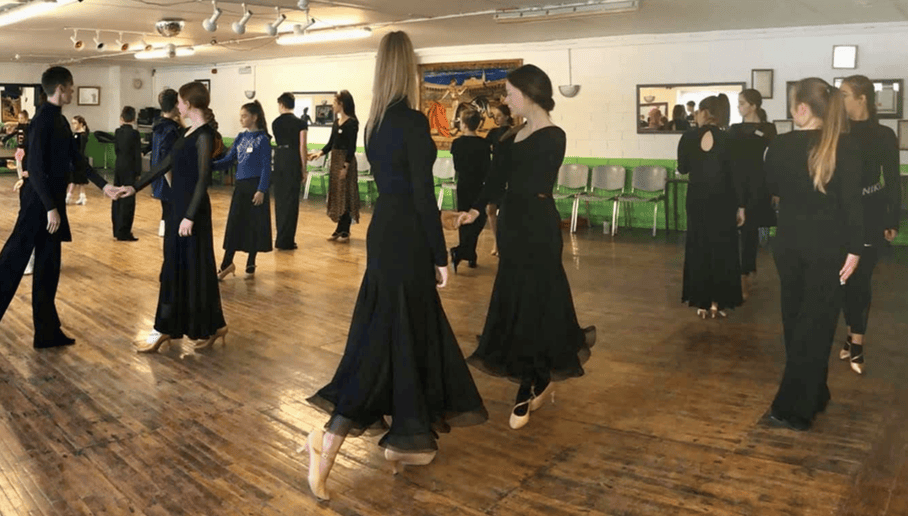
Neurological & Physical Benefits
- Automation of Muscle Memory: Private lessons input data into the brain; practice nights build muscle memory. Without it, dancers must actively think about steps, causing visible hesitation on the floor.
- Stamina Under Pressure: A round of Ballroom or Latin requires explosive energy. Continuous dancing at practice nights builds the cardiovascular endurance needed to survive a multi-dance final without losing posture.
- Spatial Awareness (Floor craft): Private lessons often happen on a clear floor. Practice class teaches dancers how to dodge other couples, change direction instantly, and navigate a crowded floor without panicking.
Psychological & Competitive Edge
- Simulating Competition Chaos: The noise, movement, and presence of other couples during open practice mimic the visual overstimulation of a real competition.
- Performance Confidence: Dancers who practice only in private lessons often freeze when people watch them. Practice nights desensitise them to being observed by peers and other coaches.
- Self-Correction Skills: In private lessons, the coach fixes every error immediately. During open practice, dancers must find their own balance, remember their routines, and learn self-reliance.
Financial & Community Value
- Maximum Return on Investment: Private lessons are expensive. Spending half a private lesson just practicing a step to music is a poor use of funds. Practice night is where they master the step, so the next private lesson can focus on advanced refinement.
- Peer Accountability & Culture: Seeing older or more advanced dancers work hard inspires younger competitors. It builds team spirit.
The Training Gap: By the Numbers (Based on no holidays taken)
- Top Competitors: Minimum 5 hours a week = 260 hours of training per year.
- 1 Private Lesson: 30 minutes a week = 26 hours of training per year.
- 1 Private Lesson: 45 minutes a week = 39 hours of training per year.
- 1 Private Lesson: 60 minutes a week = 52 hours of training per year
A single private lesson is excellent for introducing and reviewing steps, but it is physically impossible to build competitive stamina, power, or muscle memory in that brief window alone without attending a practice class.

